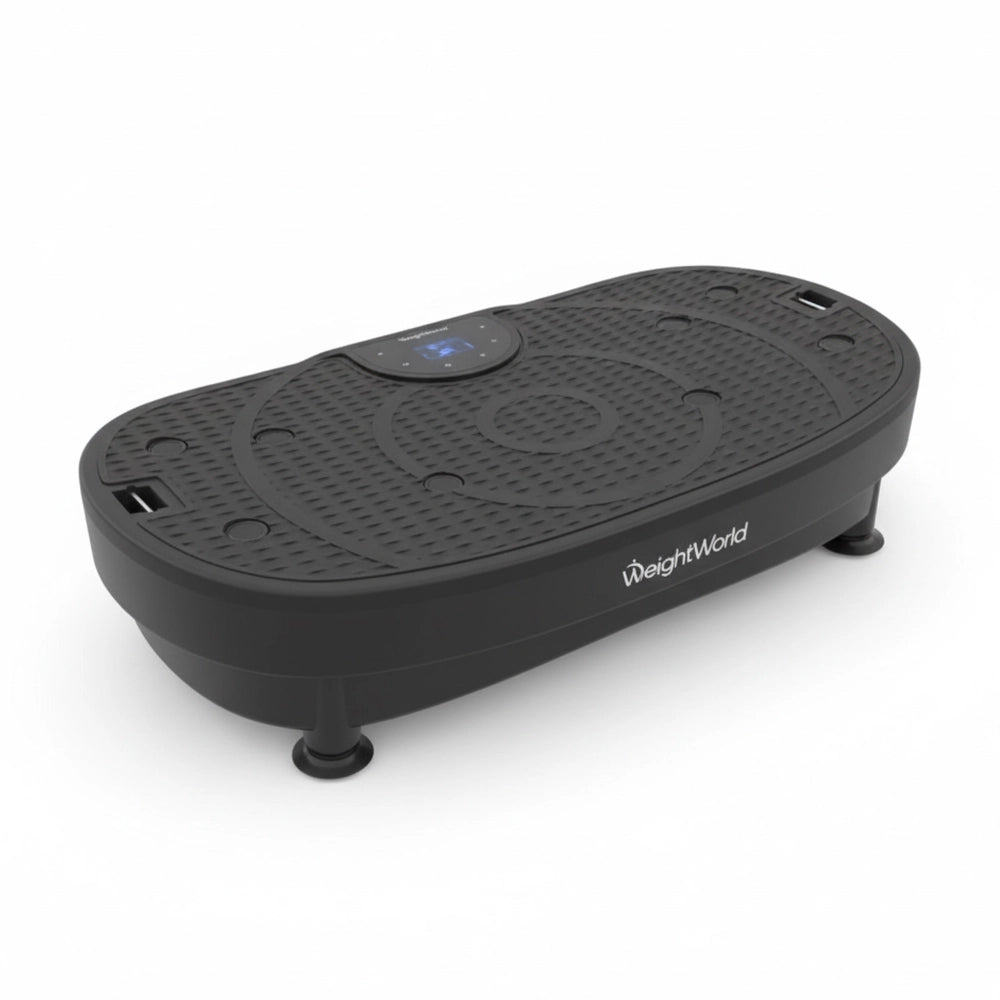
Choosing a vibration plate that aligns with personal fitness goals, space constraints, and budget can feel overwhelming given the variety of models on the market. Understanding the key specifications, safety features, and usability factors helps narrow the options and ensures a purchase that delivers consistent results over the long term. Below is a comprehensive guide to the most important characteristics to evaluate when selecting a vibration plate for home or commercial use.
Core Vibration Technology
Modern vibration platforms rely on two primary mechanisms: oscillating (piston) and linear (vertical) motion. Each type offers distinct benefits and should be matched to the intended training style.
Oscillating (Piston) Plates
- Creates a side-to-side motion that stimulates muscle fibers through rapid contractions.
- Ideal for core activation, balance training, and low-impact cardio.
- Typically quieter, making them suitable for shared living spaces.
Linear (Vertical) Plates
- Delivers an up-and-down motion that mimics traditional weight-lifting forces.
- Better for strength-building routines and deep-tissue muscle stimulation.
- Often paired with higher frequency ranges for advanced athletes.
Frequency and Amplitude Range
The therapeutic and performance benefits of a vibration plate are largely dictated by its frequency (measured in Hertz) and amplitude (the distance the platform moves). A versatile machine should allow users to adjust both parameters.
- Frequency: 5-30″?Hz for gentle warm-ups, 30-50″?Hz for muscle toning, and 50-70″?Hz for high-intensity conditioning.
- Amplitude: Low (1-2″?mm) for joint-friendly sessions, medium (2-4″?mm) for balanced workouts, and high (4-6″?mm) for deep muscle activation.
- Look for digital displays that show real-time settings, enabling precise control.
Program Variety and User Interface
Pre-programmed workout modes simplify training, especially for beginners. A well-designed interface reduces the learning curve and encourages consistent use.
- Built-in programs such as “Warm-Up,” “Fat-Burn,” “Strength,” and “Recovery.”
- Customizable timers and interval settings for personalized routines.
- Touchscreen or ergonomic button panels that are easy to read from a distance.
Load Capacity and Platform Size
Weight capacity influences durability, while platform dimensions affect the range of exercises possible.
- Choose a model with a load capacity at least 20″?% higher than the heaviest user.
- Platform dimensions of 45″?cm”???”?45″?cm accommodate full-body movements; larger surfaces support group classes.
- Consider a non-slip surface and rounded edges for safety during dynamic exercises.
Stability and Safety Features
Stability is crucial to prevent wobbling, which can diminish effectiveness and increase injury risk.
- Heavy-duty steel frames or reinforced aluminum chassis.
- Anti-vibration feet or rubber pads that secure the machine to the floor.
- Emergency stop buttons and automatic shut-off after a set period of inactivity.
Noise Level
Noise can be a deciding factor for home gyms, apartments, or commercial studios. Look for specifications that list decibel (dB) levels.
- Models under 60″?dB are considered quiet enough for most indoor environments.
- Sound-insulating motor housings and vibration dampening materials contribute to lower noise output.
Portability and Storage
Space-saving designs make it easier to integrate a vibration plate into a multi-purpose workout area.
- Foldable legs or detachable components for compact storage.
- Lightweight frames (under 30″?kg) that can be moved without assistance.
- Integrated wheels or handles for convenient relocation.
Warranty and Customer Support
Long-term reliability is often reflected in the warranty terms and the quality of after-sales service.
- Minimum 2-year parts warranty; 5-year frame warranty is a strong indicator of build quality.
- Accessible technical support channels, phone, email, live chat, and clear troubleshooting guides.
- Availability of replacement parts such as foot pads, control panels, and motors.
Integrating the Vibration Plate into a Balanced Routine
When the right vibration plate machine is selected, it can complement strength training, flexibility work, and cardiovascular sessions.
- Warm-up: 5″?minutes at 20″?Hz, low amplitude to increase blood flow.
- Strength: 30″?seconds of squats at 35″?Hz, medium amplitude, followed by a 30-second rest.
- Recovery: 10″?minutes at 10″?Hz, low amplitude to promote muscle relaxation.
Final Considerations
Investing in a vibration plate is a long-term commitment to health and performance. By evaluating technology type, frequency range, program flexibility, load capacity, safety mechanisms, noise output, portability, and warranty coverage, users can confidently select a machine that meets both current needs and future training aspirations. A thoughtful choice not only maximizes workout efficiency but also ensures the equipment remains a reliable component of any fitness regimen for years to come.
About the Author